


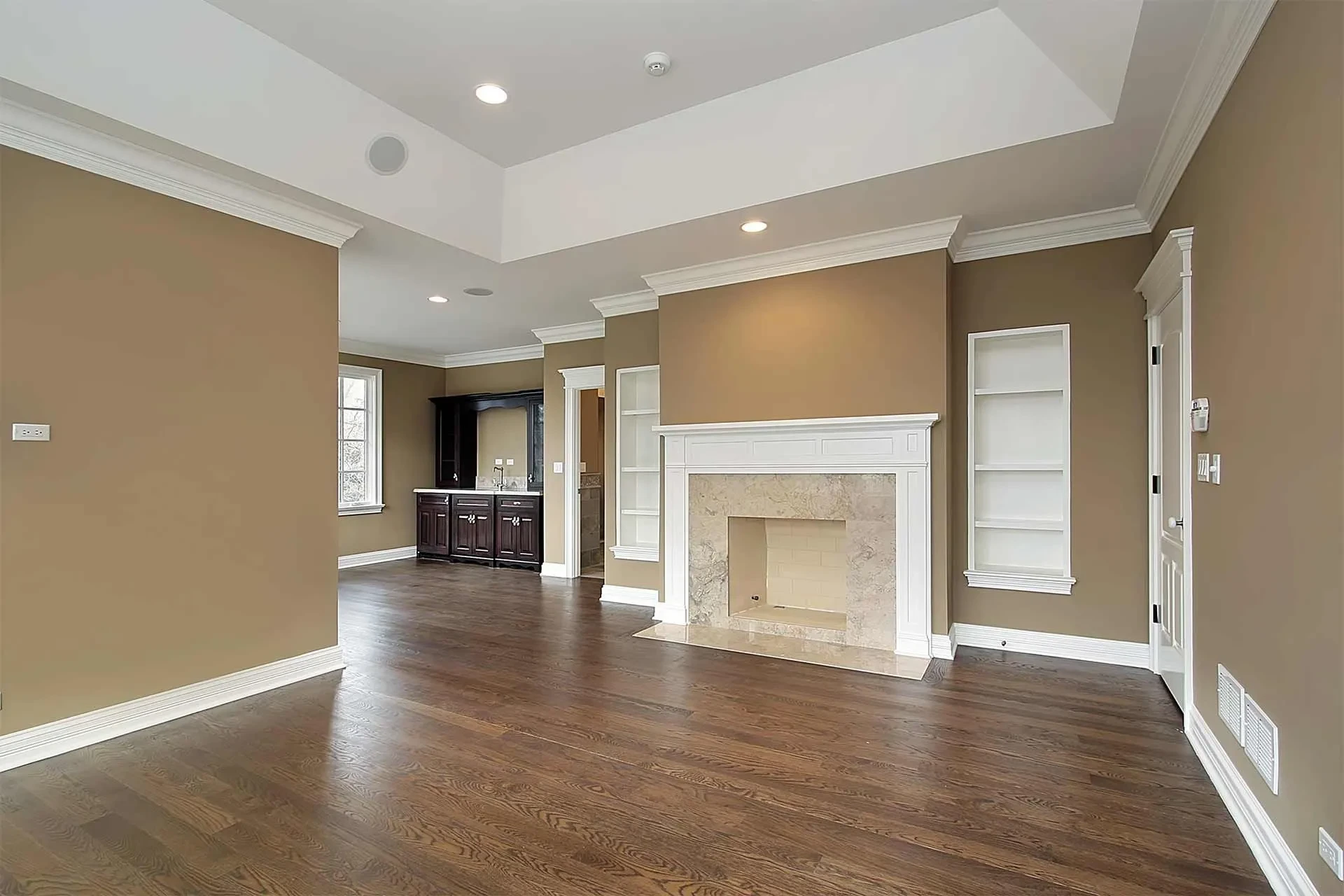
When to repaint house interior walls depends on what’s on them and how the room is used. In the Oklahoma City homes we paint, builder-grade flat paint in newer houses usually needs replacing within 3 to 5 years, while a quality eggshell or satin can last up to 10 years in bedrooms and living rooms.
The surest sign is the scrub test: if a damp sponge takes off paint or leaves a shiny patch, it’s time. Repaint sooner if the room looks dated, and repair any settling cracks before the new paint goes on.
When to Repaint House Interior: We Start With What’s on the Walls
How long does interior paint last? On our jobs, it depends far more on the paint that’s there and the room it’s in than on the calendar, which is why there’s no single answer to how often you should repaint your house interior:
| Paint on the walls | Usually lasts | First sign it’s due |
|---|---|---|
| Builder-grade flat | [3-5] years | Rubs off on a sponge |
| Eggshell or satin | up to 10 years | Fading, worn patches |
| Halls, kids’ rooms | [3-5] years | Marks won’t wash off |
| Kitchens, baths | [3-5] years | Peeling, stains |
New Build? Builder-Grade Paint Goes First
Many new homes in Edmond, Yukon and Mustang subdivisions are finished with a builder-grade flat. It’s cheap, it hides drywall flaws and it touches up easily before closing, but it’s thin and soft. Wipe it and you take paint with it, and every scuff from moving in stays put.
This build was 4 years old when the owners called. On the walk-through, the entry wall was lined with scuffs, so we ran a damp sponge across it. The scuffs barely faded, but the sponge came back tinted with the wall color and left a shiny smear behind, a sure sign of thin builder-grade flat paint.
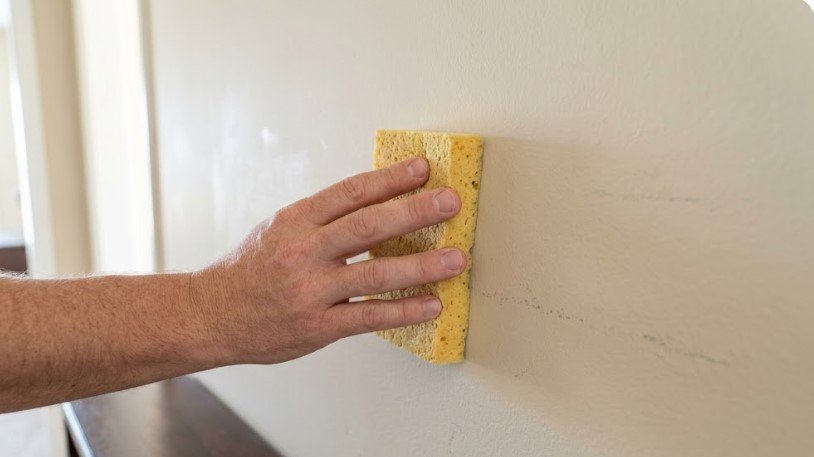
Our painters patched nail pops and a few dings along the entry and caulked the cracked corners, then rolled two coats of Sherwin-Williams SuperPaint Interior Acrylic Latex in satin through the entry, hallway, living room and kitchen.
If your house is under ten years old and still on its first coat, try the sponge on a hallway wall. Builder paint is usually the first thing in a new house to need redoing.
The Scrub Test: When Cleaning Stops Working
Paint is due when you can’t clean it anymore. Take a damp sponge to a busy wall and watch for three things: color on the sponge, a shiny burnished patch where you rubbed, or marks that don’t budge. Any one of them means the paint has worn past the point where washing helps.
The hallway between the kids’ rooms in this home shows what that looks like. Handprints, a pen scribble and a black scuff from a ride-on toy were still there after the family had gone at them with a Magic Eraser and dish soap, which only left dull, rubbed-out spots in the flat paint.
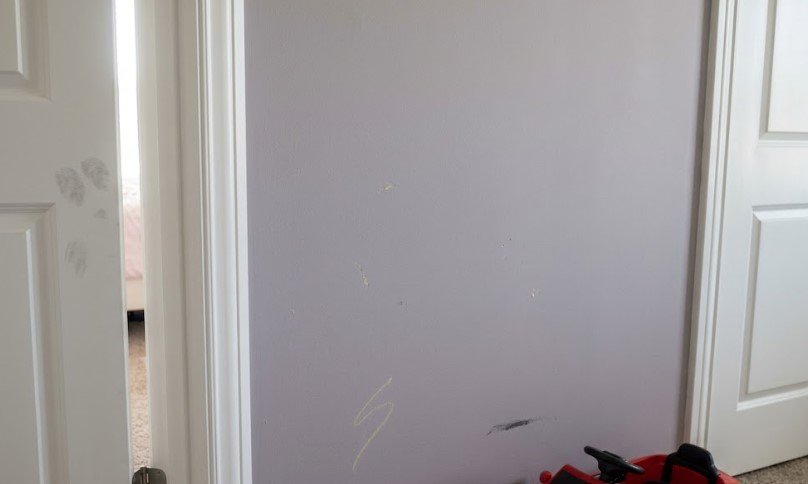
We washed the wall down, filled the small dings, sanded the burnished spots flat and spot-primed the pen scribble so it couldn’t bleed through, then painted. If you’re scrubbing the same wall every week and it’s getting worse, not better, it’s ready.
When the Room Looks Dated Before the Paint Fails
Sometimes the paint is holding up fine and the room still needs it. A heavy color, a wallpaper border or a popcorn ceiling can date a house long before the finish wears out, and buyers notice it first.
Style is a perfectly good reason to repaint; it just changes what the job includes.
The bedroom below still had its 1990s mauve walls and a floral wallpaper border running around the room at chair-rail height. The owners were getting ready to list the house and wanted it to look clean and current for buyers walking through.
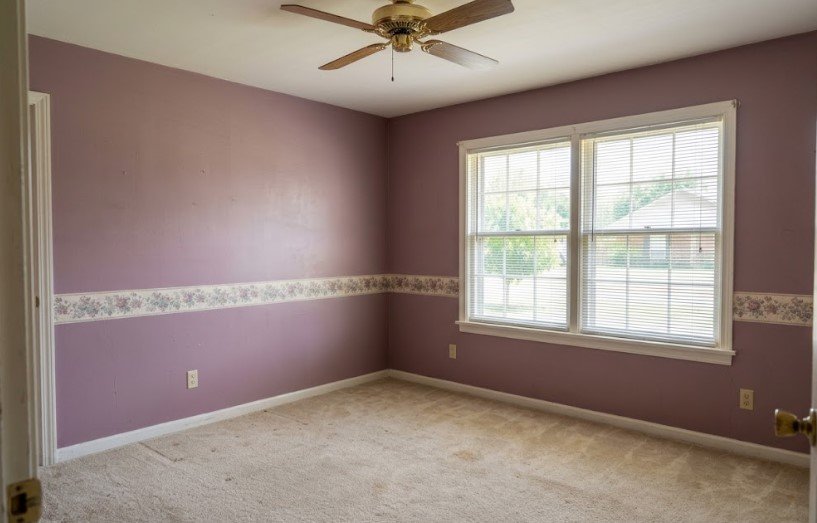
The crew stripped the border, cleaned off the glue, sealed the walls so the leftover adhesive couldn’t bleed through, and finished the walls in Agreeable Gray (SW 7029) in Sherwin-Williams SuperPaint Interior eggshell. A lighter, plainer color made the room feel bigger, the same trick that works in paint colors for small living rooms.
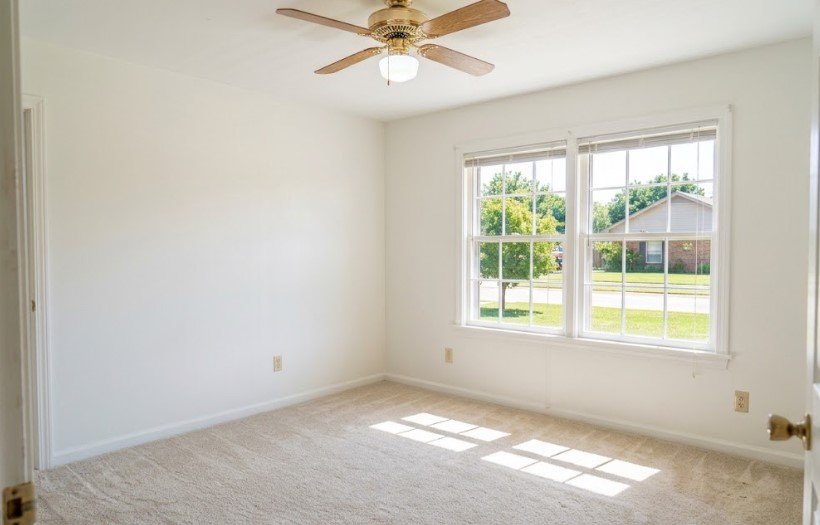
If you’d describe a room by its decade, it’s probably due, whatever the paint looks like up close.
Oklahoma Houses Move: We Fix the Cracks First
Much of the OKC metro sits on clay that swells when it’s wet and shrinks in a dry spell, and houses move with it. Oklahoma State University research on expansive soils, describes how that seasonal swelling and shrinking cracks walls in homes built on slabs. Inside, it shows up as hairline cracks at door and window corners, along drywall seams and as nail pops.
Paint over a crack and it’s back by next season.
The first thing we spotted on the walk-through in this Bethany home was the crack running up from the corner of a door frame. The owners said it had shown up about two years earlier and grew a little each summer, and the door stuck in its frame on the hottest months as the clay soil shifted.
Before any paint went on, the crew cut the crack open into a shallow V and cleared out the loose bits, bridged it with mesh tape and bedded it in joint compound, then 3 coats feathered out wide and sanded smooth.
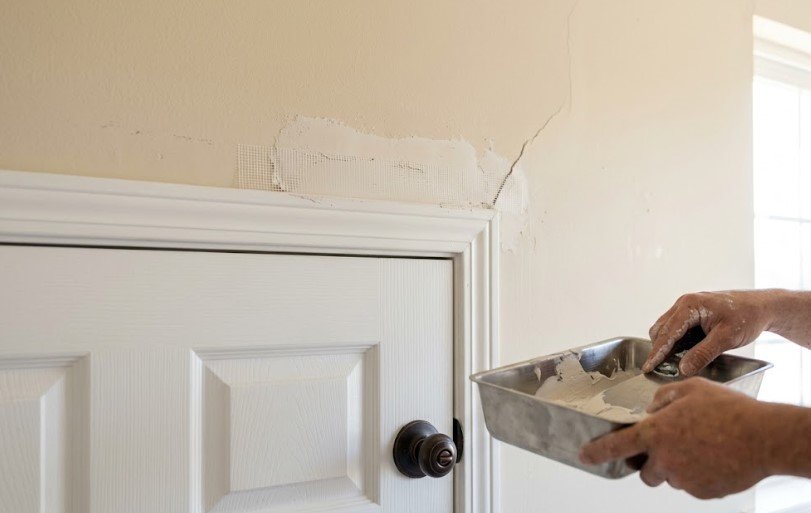
Hairline cracks are a normal part of an Oklahoma house and a normal part of our prep. Wide or growing cracks, especially with doors that stick, are a different matter: have the foundation checked before you repaint.
Can’t Do It All? Here’s the Order I’d Go In
You don’t have to repaint the whole house at once. When a homeowner asks me where to start, I go by wear and by who sees the room:
- Hallways, entries and stairwells, where hands and bags hit the walls every day.
- Kids’ rooms and the family room.
- The kitchen and main living space.
- Bathrooms, if the paint is peeling or the ceiling is stained.
- Guest rooms and anything behind a closed door, last.
Splitting the work into phases also spreads out the cost, and knowing what interior painting costs in OKC room by room makes it easier to plan which ones go first.
FAQ
Can I paint over builder-grade flat paint?
Yes, as long as it’s clean and still stuck to the wall. Wash off any scuffs, fix dings, and two coats of a better-quality paint will cover it and wear far longer.
Should I repaint before or after new flooring goes in?
Before, if you can. Drips and ladder marks end up on old flooring instead of new, and only the baseboards need a touch-up once the floors are in.
Do ceilings need repainting as often as walls?
No. Nobody touches them, so ceilings usually go much longer unless there’s a stain, a crack or smoke discoloration, while outside, how often to repaint your exterior depends on sun and weather rather than wear.
Not Sure If It’s Time?
We’ll walk through your home, run the scrub test with you and tell you honestly which rooms are due and which can wait, as part of our interior painting in Oklahoma City. Book a free estimate anywhere in the OKC metro.


