

Fixing chipping paint on walls depends on how much paint is chipping. For a few chips, scrape off anything loose, fill deep spots with spackle, sand smooth and dab on matching paint in the same sheen. For a cluster of chips, fill and sand, spot-prime the patches, then paint the wall to the nearest corner so it blends. On textured walls, rebuild the texture before you paint. If paint is flaking across the whole wall, it never bonded; the wall needs cleaning, a bonding primer and a full repaint.
How We Fix Chipping Paint on Walls: Match the Fix to the Damage
The first step is working out which of these four situations you’re looking at:
| What you see | The fix | |
|---|---|---|
| A few chips | Fill, touch up | |
| A cluster | Fill, prime, repaint to a corner | |
| Textured wall | Rebuild texture, then paint | |
| Whole wall flaking | Scrape, bonding primer, repaint |
How We Touch Up Chipped Paint on Walls
For one to three chips, you don’t need to repaint anything. Knowing how to touch up chipped paint on walls comes down to three things: the right color, the right sheen and a smooth surface underneath.
Use leftover paint from the original job if you have it. If not, cut a small chip from a hidden spot and have the paint store match it, then check the sheen on the can, because a satin touch-up on an eggshell wall will shine.
This one happened during moving day. The hallway below had two chips at about waist height where the corners of a dresser bumped the wall as it was carried through.
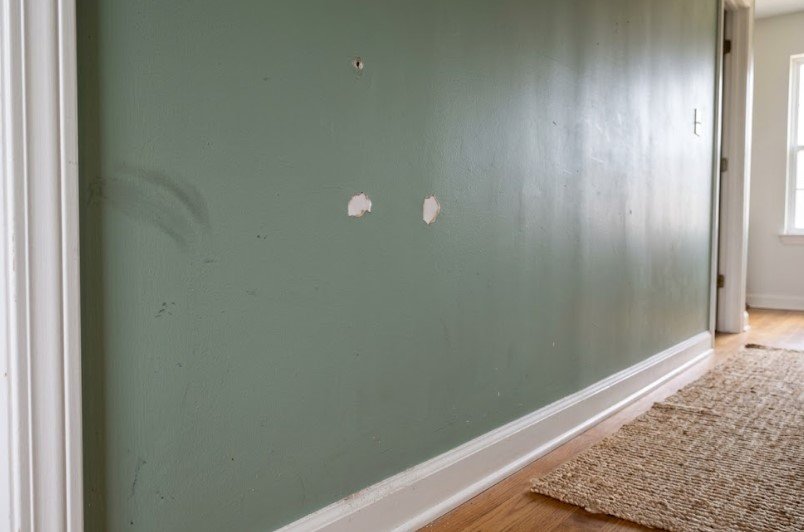
The crew scraped the loose edges, filled both chips and the nail hole, sanded them flush and spot-primed the patches. The homeowner didn’t have any of the original paint left, so we took a chip to Sherwin-Williams and had the green color-matched in the same eggshell sheen.
If you can count your chips on one hand and none are bigger than a coin, this is a job you can do yourself in an afternoon.
A Cluster of Chips: How We Fill, Prime and Paint to a Break
Once there are more than a handful of chips, dabbing paint on each one stops working. Every dab dries a slightly different shine, and the wall ends up spotted.
The fix is to fill and sand every chip flush, spot-prime the patches so they don’t soak up paint differently, then roll the whole wall to the nearest corner or break.
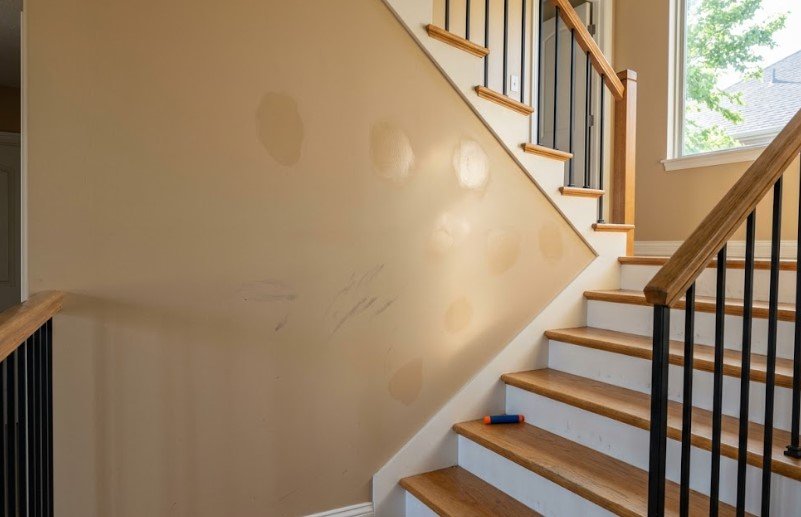
The homeowner had already dabbed paint on the chips along this stairwell in Norman, OK. You can see every one of them in the afternoon light, along with the scuffs from the kids’ backpacks and Nerf battles on the way up and down the stairs.
We filled and sanded the chips, spot-primed with Sherwin-Williams Multi-Purpose Latex Primer, and painted the stairwell wall corner to corner in Sherwin-Williams Emerald Interior Acrylic Latex in eggshell. It took one full day, with a second coat going on after lunch. If your touch-ups show from across the room, the wall needs painting to a break, not more dabs.
Textured Walls: How We Rebuild the Texture First
Orange peel and knockdown walls are everywhere in OKC builds, and they make chips harder to hide. When paint chips off a textured wall, it usually takes some texture with it, and a smooth patch on a bumpy wall shows from across the room no matter how well the color matches.
On this living room, the paint and texture kept lifting well past the original chips as the crew scraped, leaving a patch about 18 inches across. The chips started where a TV mount had been pulled out of the wall, tearing the drywall paper around the anchors. Once the patch was filled and sanded, the crew rebuilt the knockdown with thinned joint compound and a knife, let it set, and knocked it down to match the wall around it before priming.
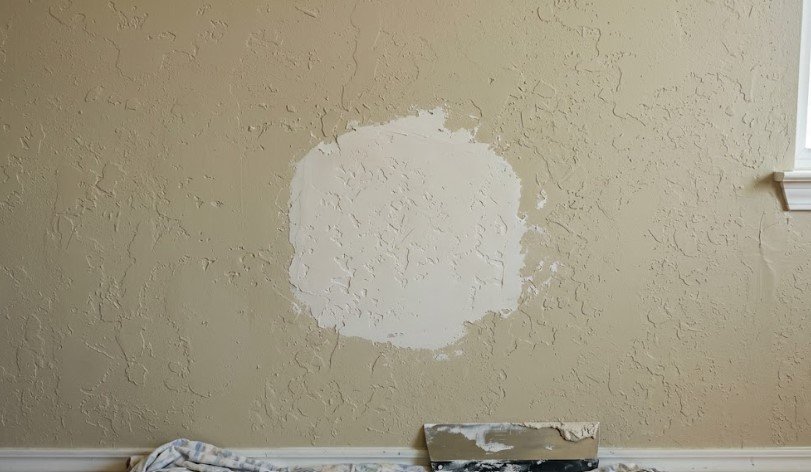
If the texture around your chip has raised peaks or flattened splotches, plan on matching it, or call in drywall repair and texture matching if you’d rather not practice on your living room wall.
Why Is My Wall Paint Chipping Everywhere?
When paint is chipping across a whole wall, it never bonded to what’s underneath. On OKC walls the usual culprits are a glossy or oil-based coat that nobody sanded or primed, wallpaper glue left behind, or dirt and grease painted straight over.
Touch-ups won’t hold on a wall like this, because the new paint sticks to a layer that’s already letting go.
Take the dining room below. The cream paint was coming off in sheets along a band at chair height, and the window casing beside it was doing the same. Under every chip was an older light blue coat.
A rag dampened with rubbing alcohol didn’t soften the blue at all, and it had a hard, glossy feel, which told the crew it was old oil-based enamel the latex on top had never gripped.
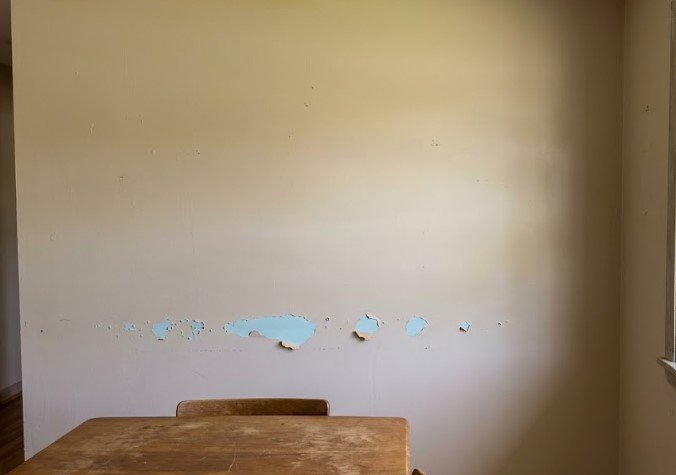
The crew ran 3M LeadCheck swabs on the blue layer and got a negative result, scraped every loose edge back to firm paint, cleaned and scuff-sanded the wall, and primed it. Two coats of Sherwin-Williams Emerald Interior Acrylic Latex in eggshell went on top. The dining room and window casing took two days, with the primer curing overnight before the first topcoat.
If paint is lifting because of steam or a leak instead, that’s a moisture problem, the same one behind peeling paint on a bathroom ceiling.
When We’d Tell You to Do It Yourself, and When to Call Us
A few chips or a small cluster is a DIY job, and I’d tell any homeowner to have a go. Call a painter when the whole wall is flaking, when the texture won’t match no matter what you try, or when the house was built before 1978.
FAQ
Can I paint over chipped paint without filling it?
You can, but the chip will still show as a dent under the new paint, especially in side light. Scrape the loose edges and fill it first; spackle dries fast enough to paint the same day.
Why does my touch-up look shinier or darker than the rest of the wall?
That’s called flashing: either the sheen doesn’t match, or the bare patch soaked up the paint differently from the painted wall around it. Spot-prime the patch, use the same sheen and roll it out past the edges.
Do I need primer on a small chip?
If the chip goes down to bare drywall or spackle, yes, or it will flash. If it’s only a shallow nick in the top coat, matching paint on its own is usually enough.
Chips That Won’t Stay Fixed?
We’ll look at the wall, tell you honestly whether it’s a touch-up or a repaint, and handle the prep that makes it last as part of our interior painting in Oklahoma City. Book a free estimate anywhere in the OKC metro.