

The best paint colors for small living rooms are light, warm, and high in light reflectance: Alabaster, Pure White, Agreeable Gray, Repose Gray, and Sea Salt are the five Sherwin-Williams shades we reach for most.
The exception is real, though. A small room painted dark on purpose, walls and trim and ceiling together, can look better than any pale color would.
Every room below is one we painted here in the OKC metro, and the reasoning is the part magazines skip.
Our go-to colors for small living rooms
- Alabaster SW 7008 (LRV 82). Warm white, the safest pick in the lineup
- Pure White SW 7005 (LRV 84). Cleaner and crisper, good with cool flooring
- Agreeable Gray SW 7029 (LRV 60). The greige that doesn’t go cold
- Repose Gray SW 7015 (LRV around 52). A true light gray with a hint of warmth
- Sea Salt SW 6204 (LRV around 60). Soft green-gray, color without weight
- Sleepy Blue SW 6225. Pale blue for a room you want to feel airy
- Evergreen Fog SW 9130 (LRV 30). The drench pick, when you go the other way
LRV is light reflectance value, a 0 to 100 measure of how much light a color bounces back. Anything above about 60 will visibly brighten a small room. It’s printed on the back of every Sherwin-Williams chip, and once you start checking it you’ll never pick a color the old way again.
Color by color, in real OKC rooms
Repose Gray with a warm accent wall
Small front room in Edmond with one window, previously a flat builder beige that made the whole space feel closed in.
We ran Repose Gray around three walls and kept a warmer neutral on the window wall. The gray keeps the room quiet and the warm wall stops it going cold, which is the risk with any gray in a north-facing room.
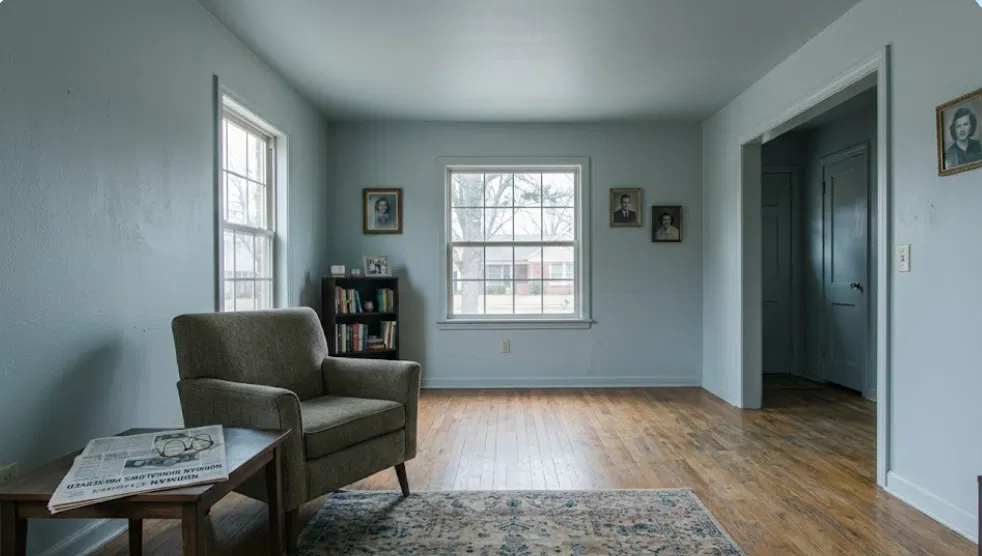
Sea Salt in an older Norman house
Plaster walls, original hardwood, two windows.
The homeowner wanted color but not commitment. Sea Salt reads green some days and blue-gray others, which sounds like a problem and is actually the appeal: it changes with the light rather than fighting it. At around 60 LRV it still brightens the room.
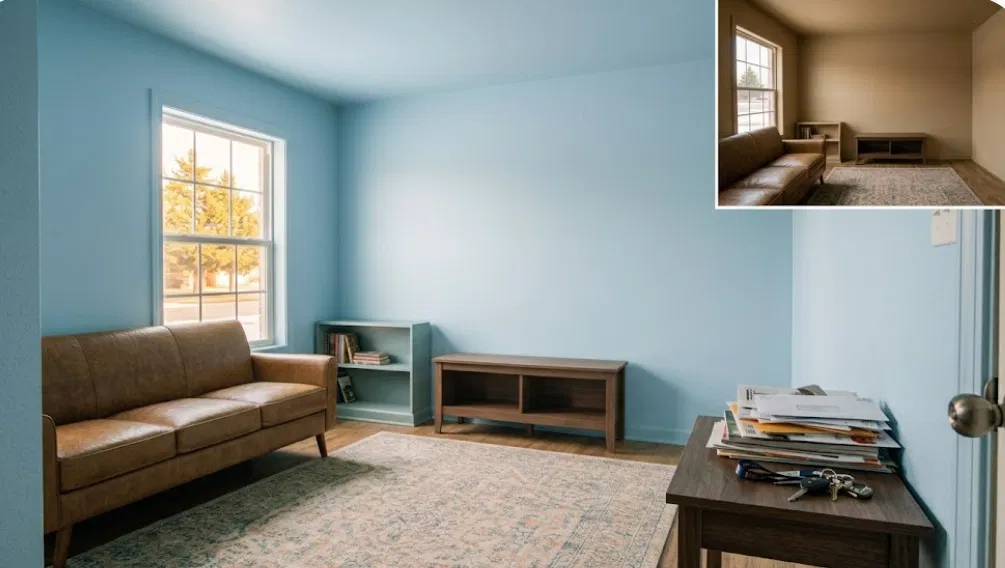
A light blue, before and after
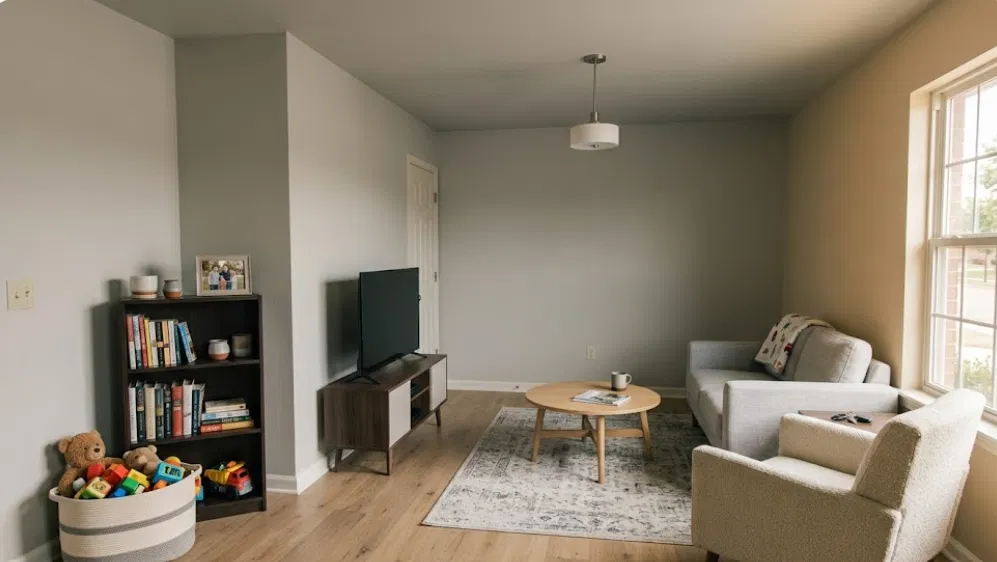
This is the clearest before-and-after we have. The room started as the standard 2000s builder tan, which absorbs light and makes the ceiling feel lower than it is. The same room in a pale blue, with the ceiling carried in the same family, gained what felt like a foot of headroom. Nothing moved. Nothing was knocked out. Just a higher LRV and a ceiling that stopped announcing itself.
Paint colors to make a small living room look bigger
Four things do the work, and only one of them is the color itself.
Go high on LRV. Above 60 reflects noticeably more light around the room. Below 40 absorbs it. That’s the whole mechanic.
Paint the trim and ceiling to match, or close to it. This is the single biggest trick and almost nobody does it. Every hard line between wall and trim tells your eye where the room ends. Take the baseboards, casings and ceiling into the same color, or a shade off it, and the boundaries soften and the room reads larger. Small rooms with heavy white trim against color always look smaller than the tape measure says.
Use eggshell or satin, not flat. Flat swallows light, which is the opposite of what you want, and it can’t be wiped. Gloss goes too far the other way and every wall flaw shows. Eggshell is the answer in nearly every living room we paint.
Check the undertone in your own light. Oklahoma daylight is bright and warm, and it will pull the undertone out of any neutral you choose. A gray that looked neutral in the store goes blue on a north wall and green next to a lawn in July. Sample on the actual wall and look at it at three different hours.
When a dark small room actually works
Here’s the part the design sites hedge on. A small living room painted dark, properly, can look fantastic.
The rule is total commitment. Color-drenching means walls, trim, ceiling, sometimes the built-ins, all in the same color. When there’s no contrast anywhere, your eye stops finding edges and the room reads as enveloping rather than cramped.
Evergreen Fog at an LRV of 30 is the one we use most for this. What doesn’t work is half measures: one dark accent wall with white trim and a white ceiling shrinks a small room every time, because you’ve drawn a box around it.
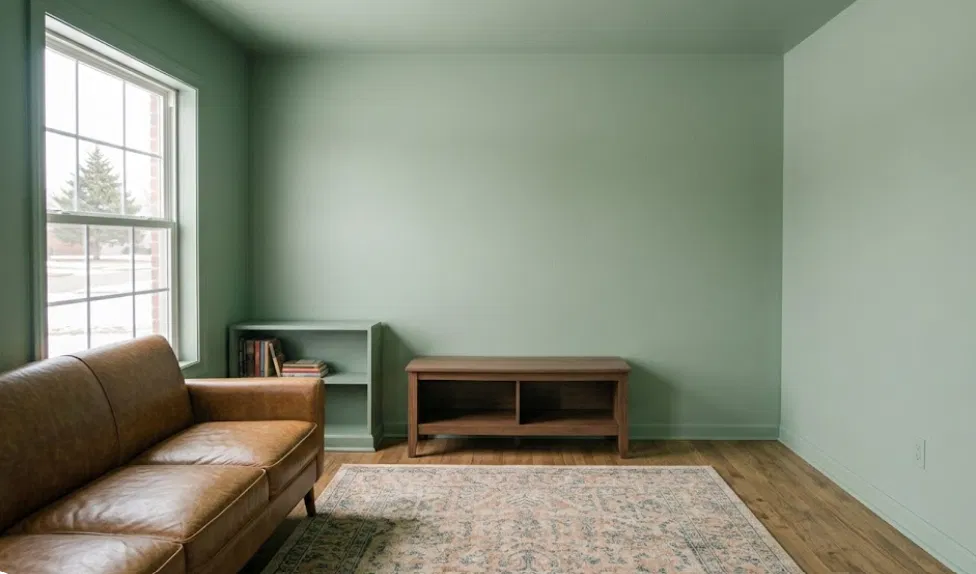
Be honest about the room first, though. This needs decent natural light or good lamps. In a room with one small window and an overhead fixture, go light.
The best light paint colors for small rooms, and the mistakes we keep fixing
If we were painting our own small living room, it’d be Alabaster with the trim and ceiling in the same color, in eggshell. It’s warm without being yellow, it’s the highest LRV on our list short of a stark white, and it works with nearly any floor.
The mistakes we get called about:
Choosing from a two-inch chip. A color gets more intense as it covers more surface. Every time.
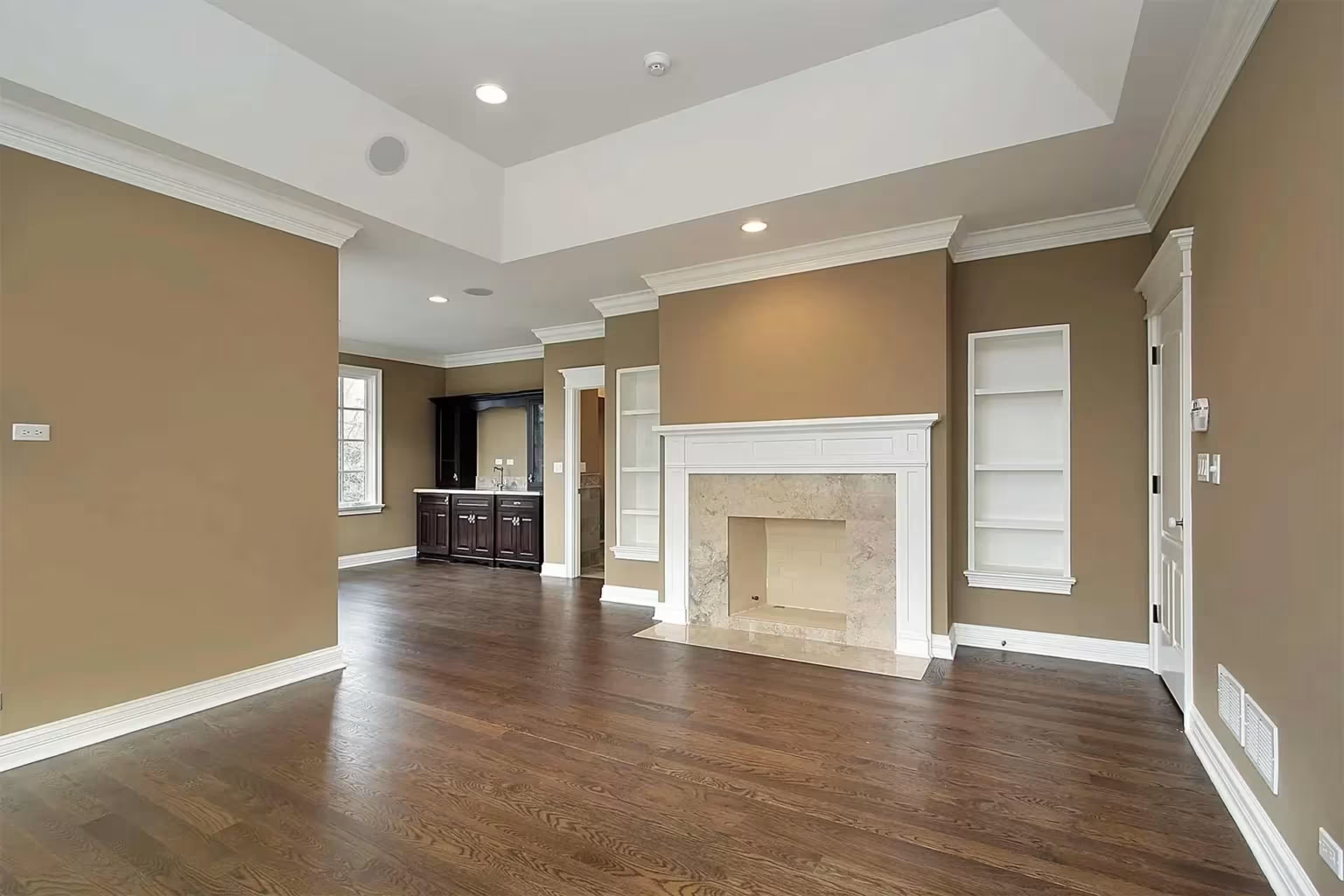
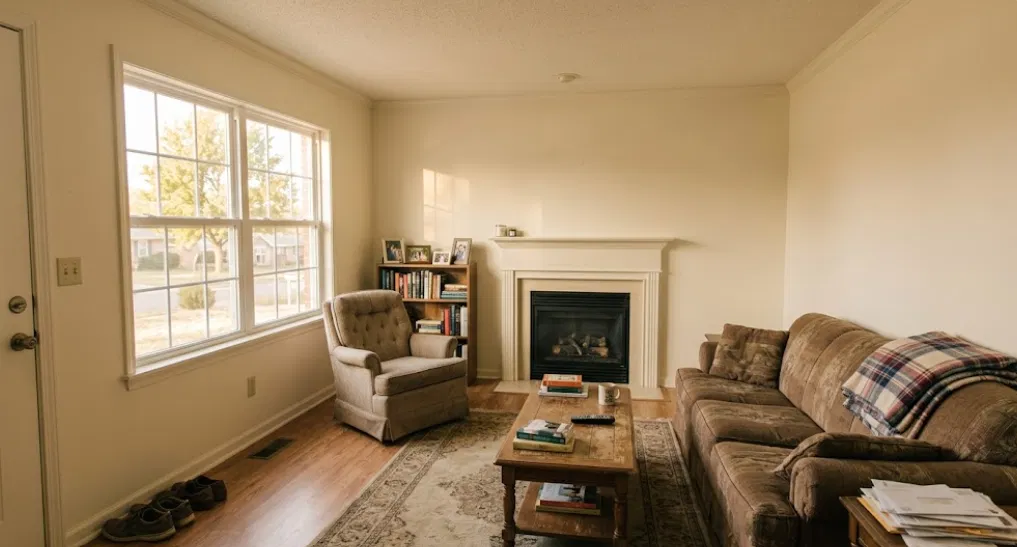
Builder beige and builder cream. Both absorb light and both date a room instantly. If your small room currently looks like the photo below, the color is doing more damage than the size is.
Stark cool white. People reach for it to brighten a room and end up with something that feels like a waiting area. Warm whites brighten better in real light.
Ignoring the ceiling. A flat white ceiling over a colored wall is a hard stop. Carrying the wall color up, even lightened by 25 percent, opens it.
Want help picking?
Next Level Painting has been painting OKC metro homes since 2014, and color is the part people agonize over most.
We bring a Sherwin-Williams fan deck to every estimate and walk the room with you at the hour you actually use it. That’s included with an interior painting quote, free, whether you book with us or not. We cover Oklahoma City, Edmond, Norman, Moore, Yukon, Bethany, Nichols Hills and Choctaw. Call 405-920-3934.
Frequently Asked Questions
Which colors make a small living room appear larger?
To make a small living room appear more spacious, go for light warm neutrals with a Light Reflectance Value (LRV) above 60.
Use the same wall color for the wall, trim and ceiling. It is important to maintain the same color for the trim as the room’s walls, as strong color contrasts will make the space look cramped.
Should you paint a small room light or dark?
Unless you are willing to go all the way with dark colors, stick to light ones. A dark room is always beautiful, but a single dark accent wall with white trim will always make the room look smaller.
Do dark colors make a room appear smaller?
Dark colors can make a room appear smaller if they are used in small amounts. They absorb light, so a single dark wall against lighter ones creates a contrast that outlines the room’s boundaries. But if you use the same dark color for the entire picture, the edges may fade away.
What is the best white to use for a small living room?
Alabaster SW 7008 is a good option for most rooms, as it has an LRV of 82, which gives it a warm, but not too warm, appearance. If you have cooler floors or furniture, you may want to consider Pure White SW 7005 to avoid a clash.
In a small room, should the ceiling be the same height as the walls?
Yes, or at least be close to it. If the ceiling is the same color or slightly lighter, it can make the ceiling appear taller without costing a fortune.
Which sheen should I use for a small living room?
Eggshell is ideal. A flat finish will absorb the light you want to reflect, and it is hard to clean, while any other finish will highlight all the imperfections in the drywall.
How can I determine if a color will be a good choice for my room?
Apply two coats of paint to a 2′ sample board and take it around the room. Examine it in the morning, at midday and under the light of a lamp at night. The color that always appears good is the winner.