

Uneven paint on walls is really five different problems with one name, and the fix depends on which you have:
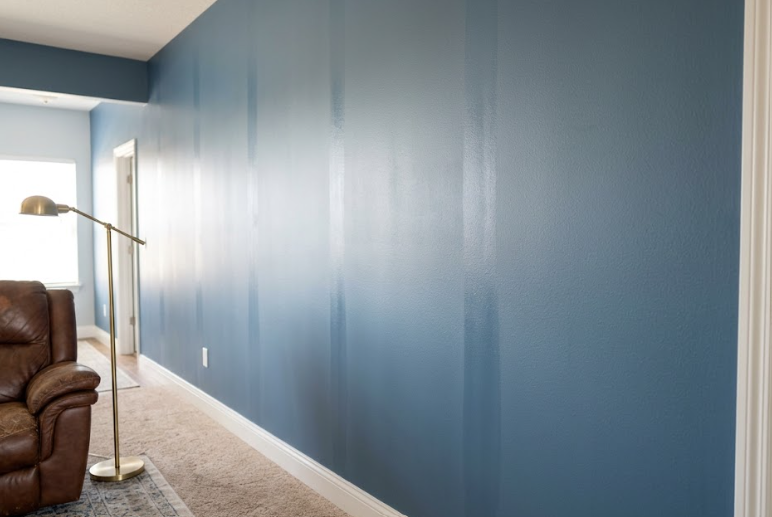
- Bands every few feet are lap marks from the paint drying before you rolled the next section
- Fine stripes are roller marks from a worn cover or too little paint
- A frame around the edges is brushed cutting-in that wasn’t blended into the rolled wall
- Dull or shiny patches are flashing, where the wall soaked up paint unevenly, usually over repairs or cleaned spots
- Color showing through is simply too few coats.
Name yours first, then fix it. If the paint is flaking off rather than just looking uneven, you’ve got paint that’s chipping, and that fix starts with what’s under it.
Uneven Paint on Walls: Which of the Five Is It?
Stand to the side of the wall with a light shining across it, and match what you see:
Lap Marks and Roller Streaks
Lap marks are bands where one rolled section dried before the next one overlapped it, so that strip got a double layer. They show up as stripes a roller-width or two apart, usually running the full height of the wall. The fix is keeping a wet edge: load the roller fully, work floor to ceiling in narrow sections, and always roll back into paint that’s still wet.
OKC makes this harder than most places. Dry air, heat and a running AC can set latex in minutes, and on a long wall you can be fighting it the whole way.
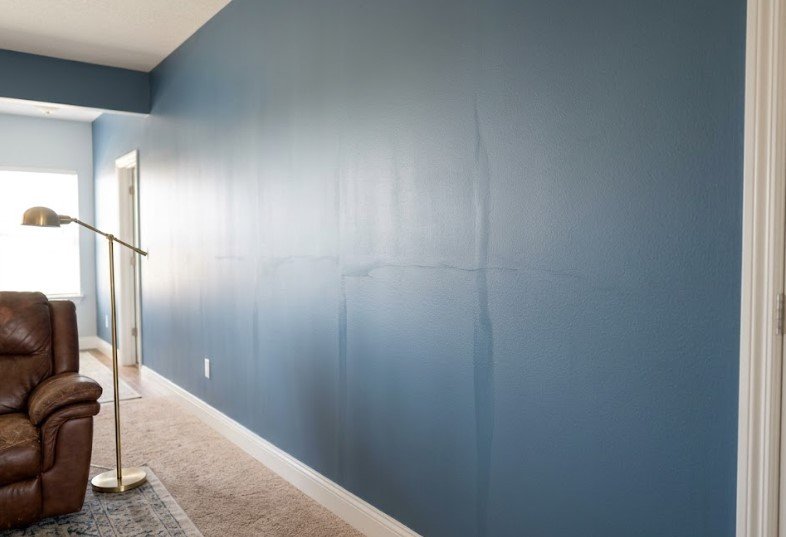
Roller streaks are a smaller cousin: fine lines from a worn or cheap cover, or from stretching too little paint. The fix for both is another coat with a fresh cover and a fully loaded roller, finished in one go from corner to corner.
A Frame Around the Edges (Picture Framing)
Picture framing, sometimes called hatbanding, is a band of slightly different color or sheen around the ceiling line and corners. It happens because the edges were brushed and the middle was rolled: brushed paint goes on thicker and smoother, and if the cut-in dried before the roller reached it, the two never blend.
You can see it plainly in the pink room below: a darker strip along the ceiling and down the corner, where the cut-in sits next to the lighter rolled wall.
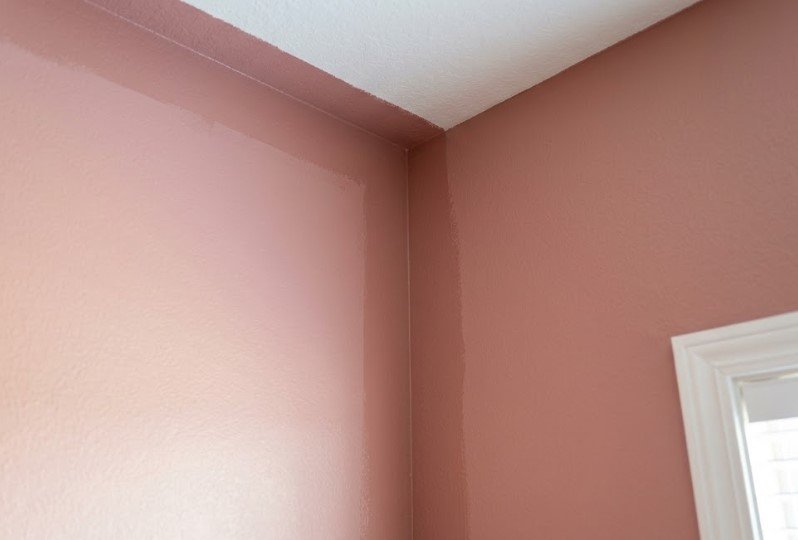
The fix is a recoat done in the right order: cut in one wall at a time, then roll it right away, taking the roller as close to the edges as you can so it covers most of the brushed strip while it’s still wet.
Dull or Shiny Patches (Flashing)
If you’re asking “why is my paint patchy” and the patches show up as dull or shiny spots rather than different colors, it’s almost always flashing. Fresh spackle, bare drywall and spots you scrubbed clean all soak up paint differently from the painted wall around them. The color matches, but the sheen doesn’t, and the patches jump out when light crosses the wall.
The hallway below in Piedmont shows it clearly. Every repair on the wall had been spot-primed and painted, and in the light from the window, each one shows as a dull square on the mint green. The crew primed the whole wall with Sherwin-Williams Multi-Purpose Latex Primer, then rolled two coats of Sherwin-Williams Emerald Interior Acrylic Latex in eggshell, and once it dried, not one patch showed, even with the afternoon sun raking down the hall.
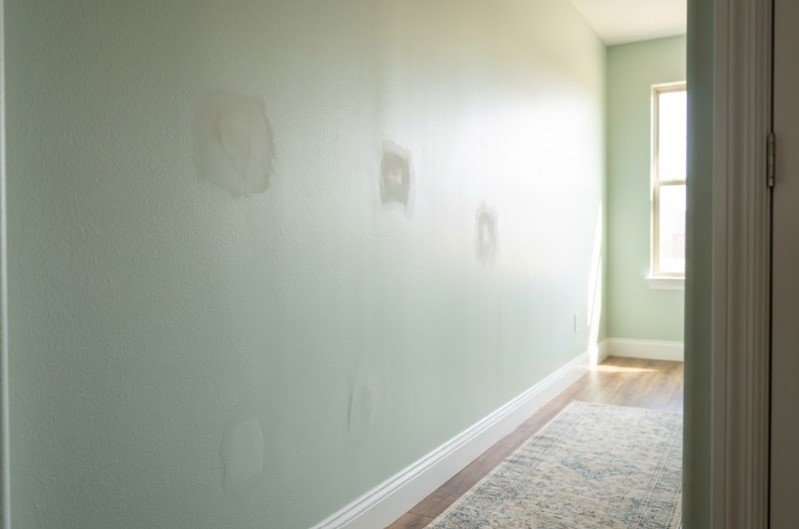
The fix is to prime the whole wall, not just the patches, so the entire surface absorbs the topcoat the same way, then repaint it corner to corner. If the repairs themselves aren’t flush or the texture doesn’t match, that’s a job for drywall repair and texture matching before any primer goes on.
Color Showing Through (Thin Coverage)
If you can see the old color in blotches under the new one, the coat is too thin. It’s most common when going from a strong color to a light one, when the paint was stretched to cover more wall, or when a single coat was supposed to do the job of two.
The room below had one coat of off-white rolled over a pink wall, and the pink came through in patches across the whole thing, above and below the chair rail.
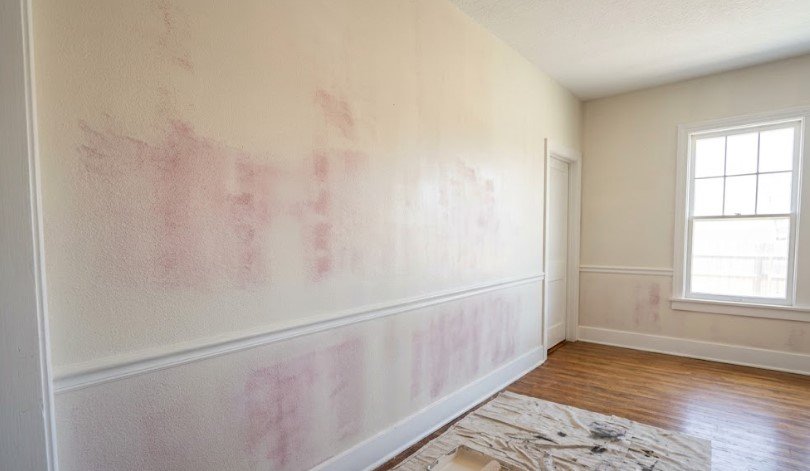
Knowing how to fix patchy paint like this is simple: another full coat over the whole wall, not spot touch-ups over the blotches, which just create flashing. For a big dark-to-light change, a coat of primer first, tinted toward the new color, saves you a third coat.
Uneven Paint on Walls: Which of the Five Is It?
Stand to the side of the wall with a light shining across it, and match what you see:
| What you see | What it’s called | The fix |
|---|---|---|
| Bands every few feet | Lap marks | Recoat with a wet edge |
| Fine stripes | Roller marks | New cover, recoat |
| Frame around edges | Picture framing | Roll close, recoat |
| Dull or shiny patches | Flashing | Prime whole wall |
| Old color showing | Thin coverage | Another full coat |
When We’d Tell You to Fix It Yourself, and When to Call Us
Lap marks, roller streaks, picture framing and thin coverage are all DIY fixes: another coat, done in the right order, will take care of them. I’d tell any homeowner to have a go.
Flashing across a whole wall, a big sheen mismatch between old and new paint, or uneven patches on a textured wall are harder. They need the whole wall primed, repairs leveled and texture matched before the topcoat, and that’s where a pro saves you from painting the same wall three times.
FAQ
Will another coat fix patchy paint, or do I need to start over?
For lap marks, roller streaks, picture framing and thin coverage, another full coat will fix it. Flashing is the exception: prime the whole wall first, or the patches will show through the new coat too.
Why does my wall look fine until the light hits it sideways?
Light raking across a wall picks up differences in sheen and thickness that you can’t see head-on. That’s why flashing and lap marks often only show in the afternoon, or under a hallway light.
Does flat paint hide uneven walls better than eggshell?
Yes. Flat and matte reflect less light, so they hide flaws and touch-ups better, while eggshell and satin are easier to clean but show more, which is worth weighing in a busy hallway or kids’ room.
Still Seeing Patches?
We’ll look at the wall under a work light, tell you which of the five you’ve got, and whether another coat will do it. It’s how we approach every job of interior painting in Oklahoma City. Book a free estimate anywhere in the OKC metro.